What Happens During a Sewer Camera Inspection?
By Ohio Sewer Masters
You booked the inspection. Now you're wondering what actually happens when the technician shows up. Here's the appointment step by step, from finding the access point to the report in your inbox.
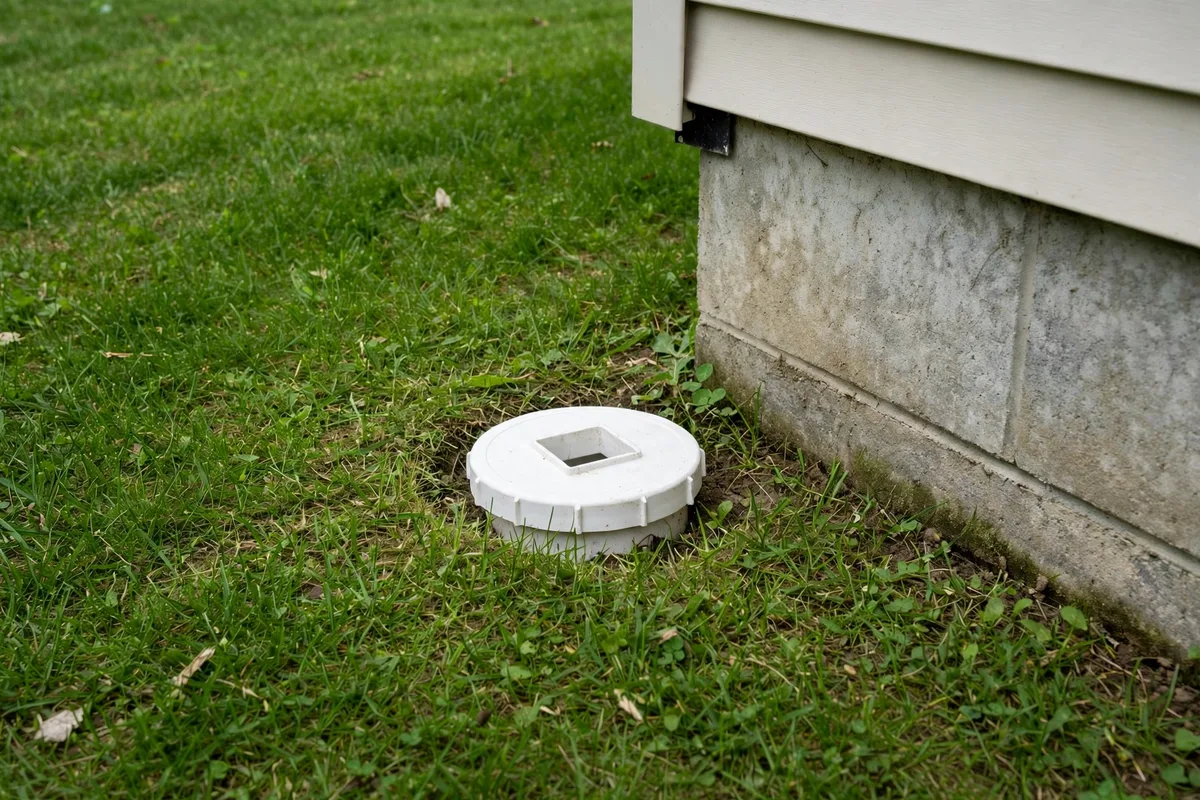
Everything starts at an access point like this outdoor cleanout, the doorway into your sewer lateral.
A sewer camera inspection takes about an hour. The technician feeds a waterproof camera on a flexible cable through your lateral from an access point to the city main, you watch the live picture together on a monitor, and you leave with a video recording and a written report describing your pipe's material, condition, and every defect found.
Before the Technician Arrives: What to Have Ready
The inspection goes faster when the access point is reachable. If you know where your outdoor cleanout is, usually a white or black cap in the yard between the house and the street, clear away mulch, landscaping, or anything sitting on top of it. If the access is a basement cleanout, move stored items a few feet back so the technician has room to work. If your home is older and has no cleanout at all, the camera may go through a pulled toilet, so clear a path to the nearest bathroom.
You don't need to do anything to the plumbing itself. Don't run a bunch of water "to help." Don't pour anything down the drains. Just make sure someone over 18 is home, because the most useful part of this appointment happens with you watching.
Step One: Finding the Way In
The technician's first job is locating the best entry point. The ideal is an outdoor cleanout, which gives a straight shot down the lateral. Many Ohio homes built after the 1970s have one. Older homes often don't, and that's normal. The fallback options, in order of preference:
- Basement cleanout. A capped pipe stub, usually near where the main drain exits the foundation wall. Works well and keeps everything indoors.
- Pulled toilet. The technician removes a first-floor toilet and runs the camera through the flange. It adds time and means reseating the toilet with a new wax ring afterward, which is part of the job.
- Roof vent. Rarely the first choice, but possible when nothing else exists. It's awkward and gives a less useful angle.
If you've never seen a cleanout at your house, don't assume you don't have one. They're often buried under a few inches of soil or hidden behind shrubs. A technician with a locator can usually find a buried one in minutes.
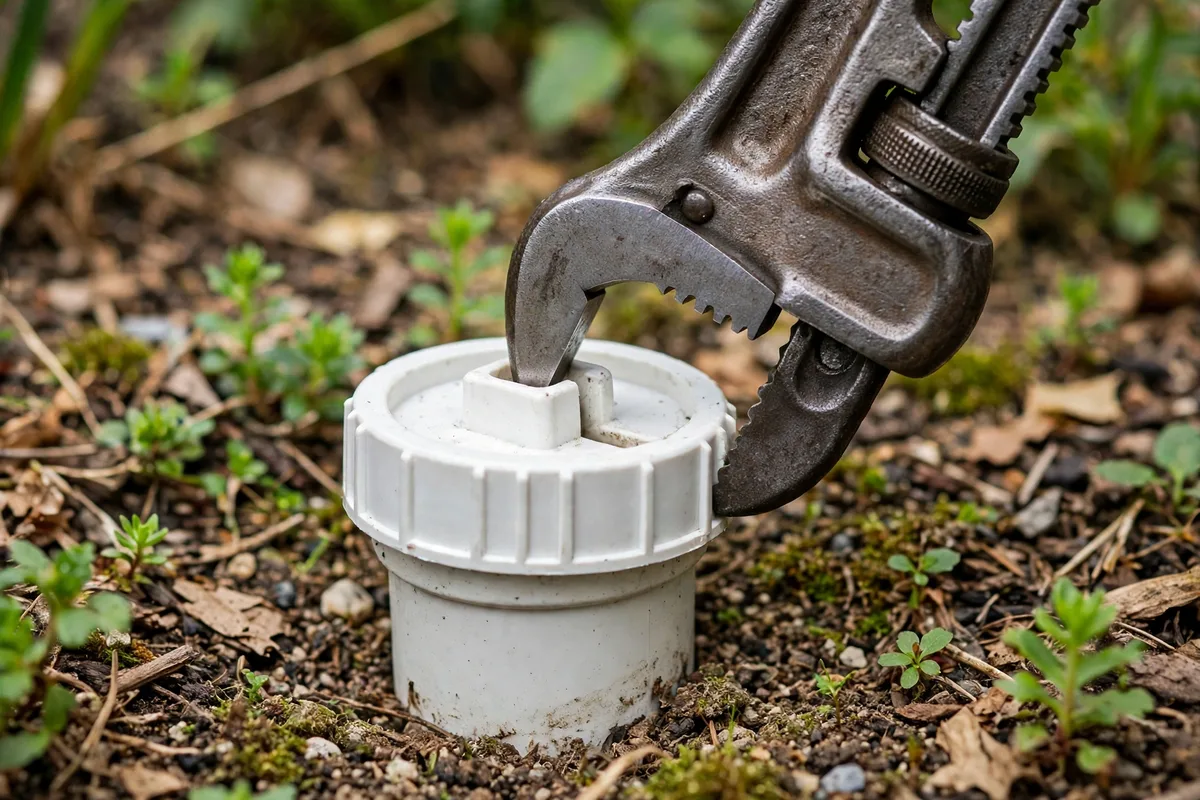
Once the access point is open, the camera goes in on a flexible push cable, sometimes hundreds of feet of it.
Step Two: The Camera Run
The camera itself is a small waterproof head, about the size of a golf ball, mounted on the end of a flexible fiberglass cable. The technician pushes it through the lateral while you watch the live feed on a monitor. The screen shows the inside of your pipe in real time, with a footage counter ticking off the distance from the access point.
The camera travels the full length of the lateral, from your house to the city main or your septic connection. On a typical Ohio lot that's somewhere between 40 and 100 feet. The technician narrates as it goes: "Here's your cast iron transitioning to clay tile at 22 feet. There's a root mass at 38 feet. This joint at 51 feet is offset about half an inch."
This is the part worth being present for. Reading a report later is fine, but watching a root ball fill your screen at the 40-foot mark makes the problem real in a way paper never does. You'll also see the good news, if there is any: long stretches of clean, sound pipe that need nothing at all.
What the Camera Actually Shows You
| What appears on screen | What it means |
|---|---|
| Clean, round pipe walls | Sound pipe. Nothing to do here. |
| Fibrous masses or tendrils | Tree root intrusion through joints or cracks. |
| Standing water in a dip | A belly, a sagging section where waste collects. |
| A visible step or lip | An offset joint, where one pipe section has shifted. |
| Cracks or missing chunks | Structural damage, possibly from freeze-thaw or age. |
| Grease coating the walls | Grease buildup narrowing the pipe. |
| The camera stops dead | A collapse or severe blockage. The stopping point is itself a diagnosis. |
Step Three: Marking Locations From Above Ground
Finding a defect is only half the job. The other half is knowing where it is under your yard. The camera head carries a small radio transmitter, and the technician walks the yard with a locator wand that picks up the signal. When the wand is directly over the camera head, it marks the spot, and the depth reading tells how far down the pipe sits.
This is how a repair crew later knows exactly where to dig, or where to start a pipe lining. Without located defects, every repair estimate is a guess. With them, the estimate names the footage, the depth, and the surface above it. If your technician skips the locating step, ask why.
On the location side, remember that buried utilities share the ground with your sewer line. Before any repair digging happens, call 811 (call811.com) so gas, electric, and telecom lines get marked. The U.S. EPA also publishes homeowner guidance on private sewer laterals and their maintenance responsibilities.
Step Four: The Report and the Recording
After the camera run, you should receive two things: the video file and a written report. The report describes the pipe material section by section, lists every defect with its footage location and depth, and gives a plain-language condition assessment. Some companies include still photos pulled from the video at each defect.
Keep both. The video is your baseline. If another company quotes you a repair next year, you can compare their findings against your recording instead of taking anyone's word. If you sell the house, the video is documentation for the buyer. A company that won't hand over the recording is a company to avoid.
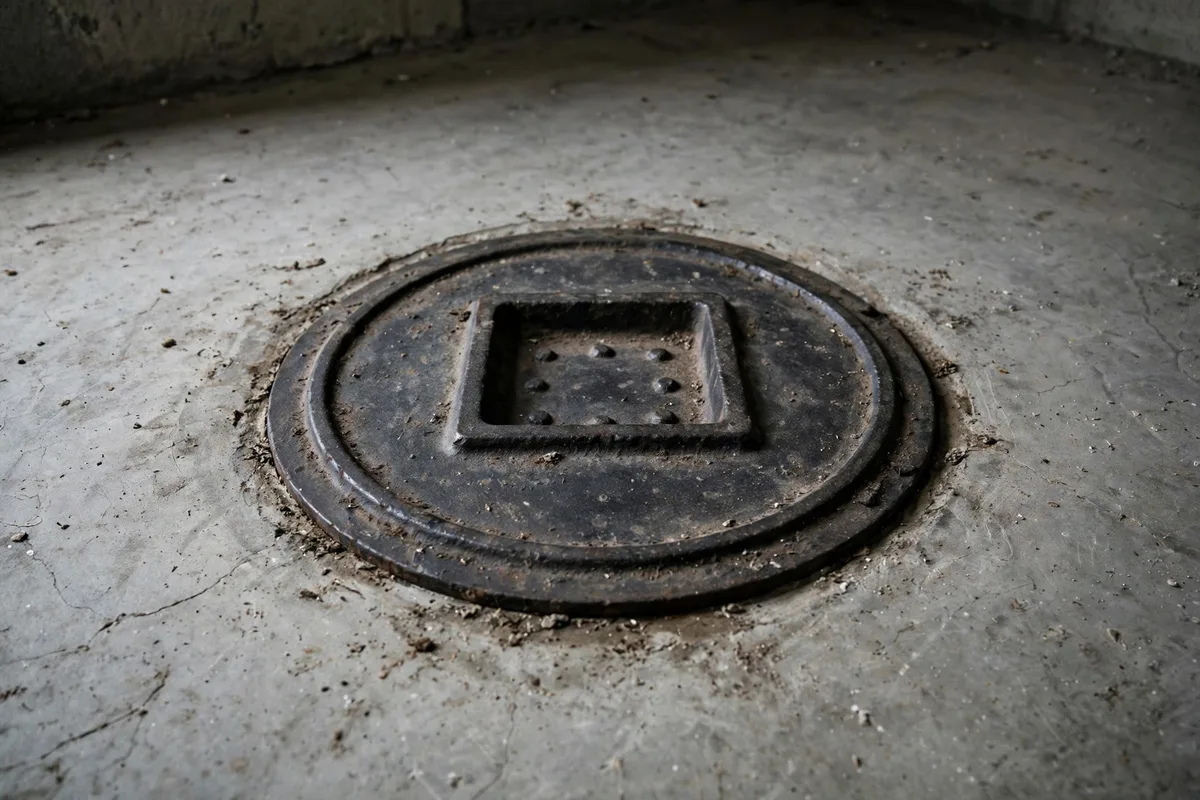
The review is the payoff. Watch the footage with the technician and ask about anything you don't understand.
Questions Worth Asking While You're There
The technician is standing in your yard with your pipe on a screen. This is the cheapest expert consultation you'll ever get about your sewer line. Use it:
- "What material am I looking at, and where does it change?" Many Ohio laterals switch materials mid-run, clay to cast iron or vice versa. Each material fails differently.
- "Which of these defects need repair, and which just need watching?" Not every flaw is an emergency. A good tech separates maintenance issues from repair issues.
- "How deep is the line here?" Depth drives repair method and scope. Shallow problems are simpler than deep ones.
- "If this were your house, what would you do first?" It's a direct question and it usually gets a direct answer.
- "Can I get the video file today?" The answer should be yes.
If you're scheduling the inspection because you're buying the house, our pre-purchase sewer inspection guide covers the timing and negotiation side. If you're wondering how often this should happen at all, see how often to inspect your sewer line.
What an Inspection Can't Tell You
Honest limits matter. A camera shows the inside of the pipe, not the soil around it, so it can't tell you whether the ground is stable or still settling. It can't see the future: a pipe that looks fine today can still develop problems. And in a line that's fully blocked with standing sewage, the camera may only see murky water until the line is cleared first, which is why inspections sometimes follow a cleaning. Knowing these limits keeps expectations straight: the camera is the best diagnostic tool in the trade, not a crystal ball.
For the full picture on what comes after the diagnosis, see sewer camera inspection and warning signs your sewer line is failing.
People Also Ask
Do I need to be home during a sewer camera inspection?
It helps. The technician narrates the footage in real time, and seeing the pipe's condition on the monitor with explanation beats reading a report later. You can ask questions as defects appear and understand exactly what you are looking at. If you cannot be there, request the recorded footage and a written summary of findings with locations.
Will the camera damage my pipes?
No. The camera is a small, smooth device on a flexible cable, far gentler than any cleaning equipment. It cannot crack, scratch through, or otherwise harm even fragile old pipe. The only requirement is an access point: a cleanout, a pulled toilet, or a vent. The inspection is purely diagnostic with no physical impact on the line.
How accurate is the camera's location transmitter?
Very, for practical purposes. The sonde in the camera head emits a signal that the surface locator reads, typically pinpointing the defect within inches horizontally and giving a reliable depth reading. That accuracy is what lets a repair crew excavate a small targeted hole instead of trenching to find the problem.
Camera Inspection FAQs
Most residential inspections take 45 minutes to an hour from the time the technician arrives. That includes locating the access point, running the camera to the city main or septic connection, reviewing the footage with you, and writing up the findings. Longer or harder-to-access lines can push it toward 90 minutes.
You should be. The most valuable part of the inspection is watching the live picture with the technician and asking questions as defects appear on screen. If you can't be there, ask for the recorded video file and a written report with timestamps so you can review it later.
Many older Ohio homes don't have an outdoor cleanout. The technician can usually pull a toilet and run the camera through the flange, or work from a basement cleanout if one exists. Pulling a toilet adds time and requires reseating it with a new wax ring afterward, which is part of the job.
No. The camera head is small, smooth, and pushed or pulled through on a flexible cable. It applies far less force than a drain snake. The only caution is with pipes that have already collapsed, where the camera simply can't pass, which itself tells you something important.
Yes, within reason. The camera head carries a transmitter, and the technician tracks it from above ground with a locator wand. That marks the defect's position and depth on the surface, usually within a foot or two. This is how repair crews know exactly where to dig or where to start a lining.
Ask what pipe material you're looking at, how deep the line runs, where the defects are in feet from the access point, and whether each defect is a maintenance issue or a repair issue. Also ask for the video file itself. A company that won't share the recording is a company you shouldn't hire.
See Inside Your Sewer Line
We'll run the camera, walk you through the footage, and hand you the video and a straight report. No guesswork.
Call (614) 350-5706