Is Your Garbage Disposal Wrecking Your Sewer Line?
By Ohio Sewer Masters
The disposal grinds everything you feed it. Your sewer line was built for none of it. Here's what happens between the sink and the street in an older Ohio home.
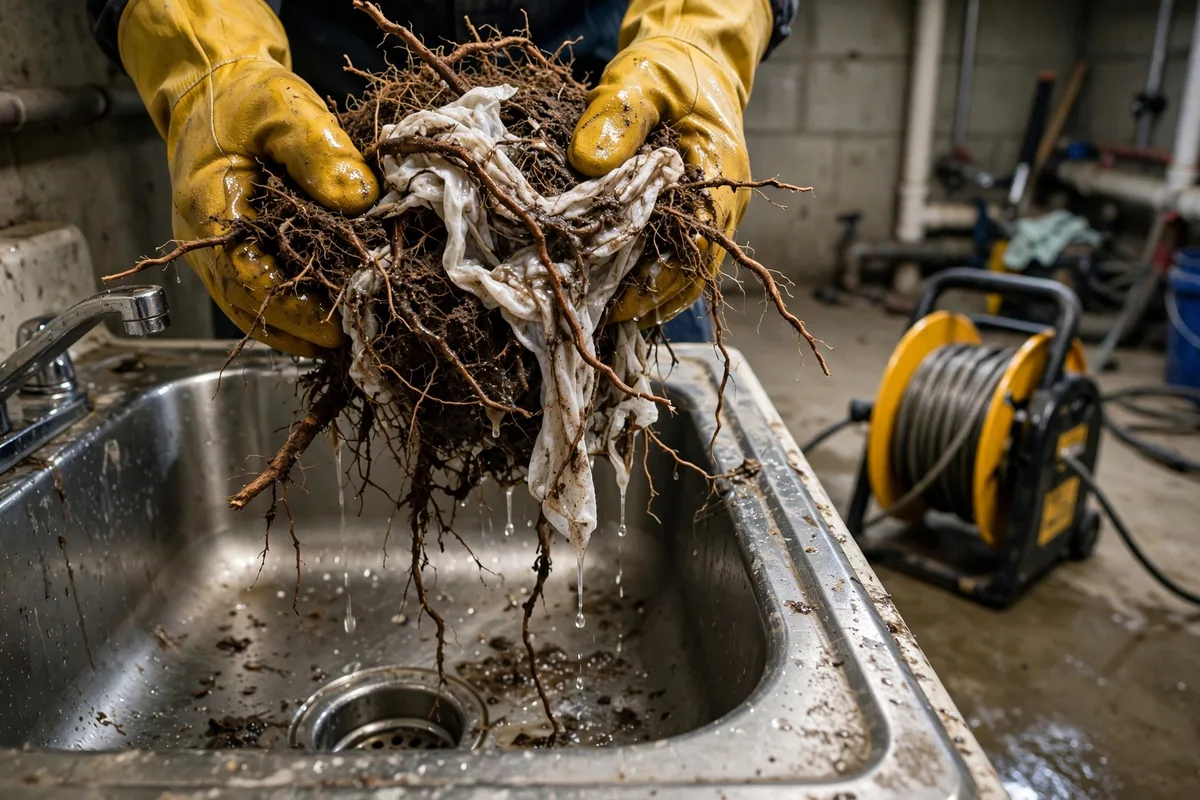
This is what comes out of lines fed by years of disposal abuse: tangled fibers, grease, and compacted food waste.
A garbage disposal doesn't change what your sewer line can handle. It only makes food smaller. Ground-up grease still solidifies downstream, fibrous foods still tangle into ropes, and starchy foods still swell in water. In older Ohio homes with cast iron or clay laterals, heavy disposal use is one of the fastest ways to build the kind of blockage that needs professional clearing.
The Core Misunderstanding
Most people treat the disposal as a second trash can. Scrape the plate, flip the switch, and the food is "gone." But nothing is gone. The disposal is a grinder, not a dissolver. It reduces a chicken breast to chicken-flavored particles and sends them into a pipe system designed, decades ago, for water, soap, and human waste. The particles still have to travel 40 to 100 feet through your lateral, and they still have to behave once they get there.
This matters more in Ohio than in newer suburbs elsewhere because of the pipe inventory. A 1965 ranch in Columbus with original cast iron has a rough, scaled interior that catches everything. A 1950s cape in Cleveland with clay tile has joints every few feet where particles settle. Modern PVC is forgiving. The pipes under most Ohio homes with disposals are not modern PVC.
What Each Food Type Does Downstream
Not all disposal waste is equal. Here's the breakdown by category:
Grease, oil, and fat. The number one disposal sin. Hot grease is liquid when it leaves the disposal and solid when it cools thirty feet down the line, where it coats the pipe walls. Ground-up meat adds its own fat to the mix. Over months, the coating narrows the pipe. This is the same chemistry behind commercial grease problems, covered in our grease trap guide, just at residential scale.
Fibrous foods. Celery, artichoke leaves, corn husks, onion skins, asparagus. The disposal chops them into strings, and the strings wrap around each other into rope-like tangles. These tangles catch everything that follows. One handful of celery strings can seed a clog that grows for weeks.
Starchy foods. Pasta, rice, potato peels, bread dough, oatmeal. Starch absorbs water and swells, and it keeps swelling in the pipe. A cup of rice becomes a cup and a half of paste sitting in your lateral. Potato peels are especially bad: they form a starchy mat that seals against the pipe wall.
Coffee grounds. A spoonful is harmless. A full filter every morning for a year is a sediment bed. Grounds don't dissolve, don't float well, and pack into a dense sludge in any low spot or belly in the line.
Bones and pits. These don't hurt the sewer line so much as the disposal itself. They dull the impellers, and a struggling disposal grinds everything else coarser, which makes every other problem worse.
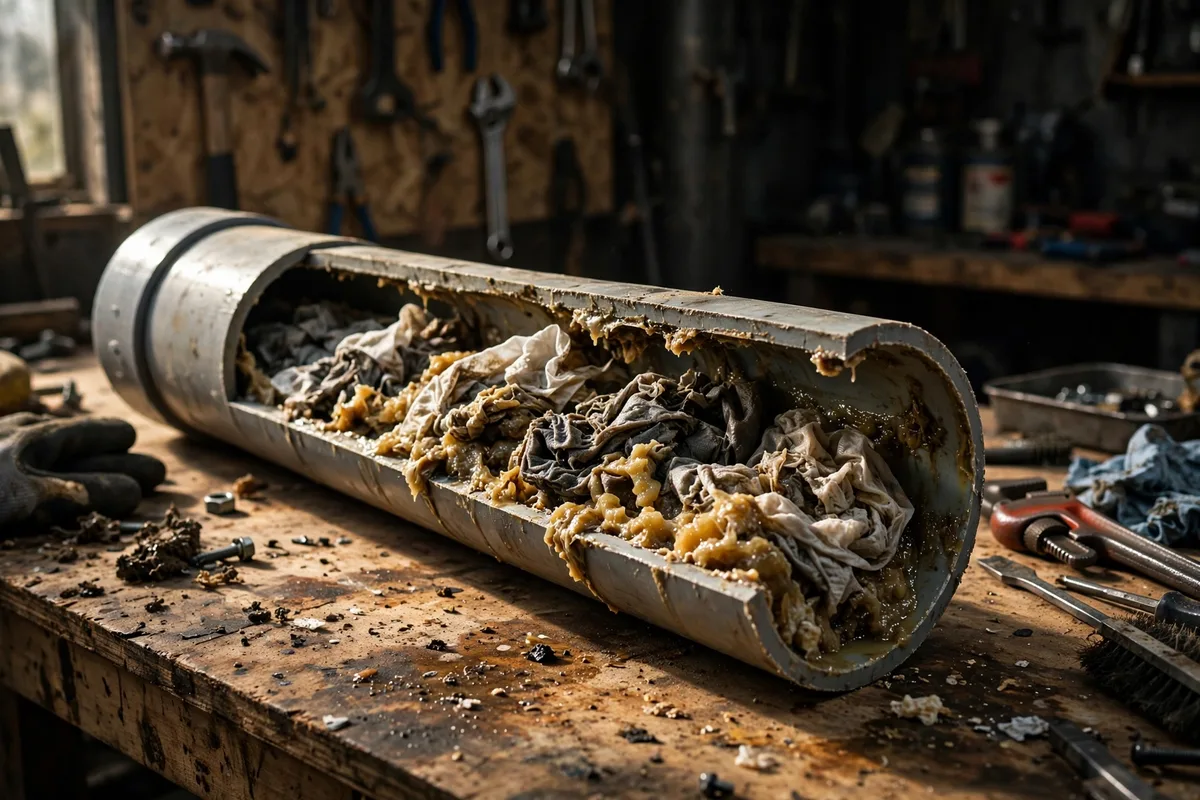
Grease doesn't care that it went through a disposal. It solidifies downstream exactly the same.
The Hot Water Trap
"But I run hot water with it." This is the most common defense, and it's half right in the worst way. Hot water does melt grease so it flows past the disposal and out of sight. That's the problem: out of sight is not gone. The water cools as it travels through the lateral, and the grease re-solidifies further downstream, often past a bend or in a low spot where it's harder to reach. You've moved the clog from a convenient location to an inconvenient one.
Cold water is actually the better choice when grinding anything fatty, because it keeps grease solid and moving as particles rather than as a coating. But the real answer is neither: keep grease out of the drain entirely. Pour it into a can, let it solidify, throw it in the trash. No water temperature fixes grease in a sewer line.
Disposals and Old Pipes: A Bad Combination
The disposal itself is a modern appliance. The pipes it feeds are often anything but. Here's how the common Ohio pipe materials handle disposal waste:
| Pipe material | How it handles disposal waste |
|---|---|
| Cast iron (1950s–1970s) | Internal scale and roughness catch food particles and grease. The worst common pairing with a heavy-use disposal. |
| Clay tile (pre-1960s) | Joints every few feet collect settling solids. Fibrous tangles snag on joint lips. |
| Orangeburg (1940s–1960s) | Already fragile and deforming. Added solids accelerate blockages in the narrowed, blistered interior. |
| PVC (modern) | Smooth walls pass ground food well. The most forgiving material, but grease still coats it over time. |
If your home still has its original lateral, the disposal is feeding the least forgiving pipe in the table. Our pipe lifespan guide covers what each material is up against.
Disposals and Septic Systems
Roughly a third of Ohio homes outside the cities run on septic, and disposals are harder on septic than on city sewer. A septic tank relies on bacteria breaking down waste at a rate the system was designed for. Ground-up food dumps a heavy organic load the tank wasn't sized to digest. The result is faster sludge accumulation, more frequent pumping, and in bad cases, solids escaping to the drain field, which is the most expensive part of the system to replace.
The U.S. EPA publishes homeowner guidance on septic systems that addresses waste load directly. If you're on septic and use a disposal daily, you're working against the system's design.
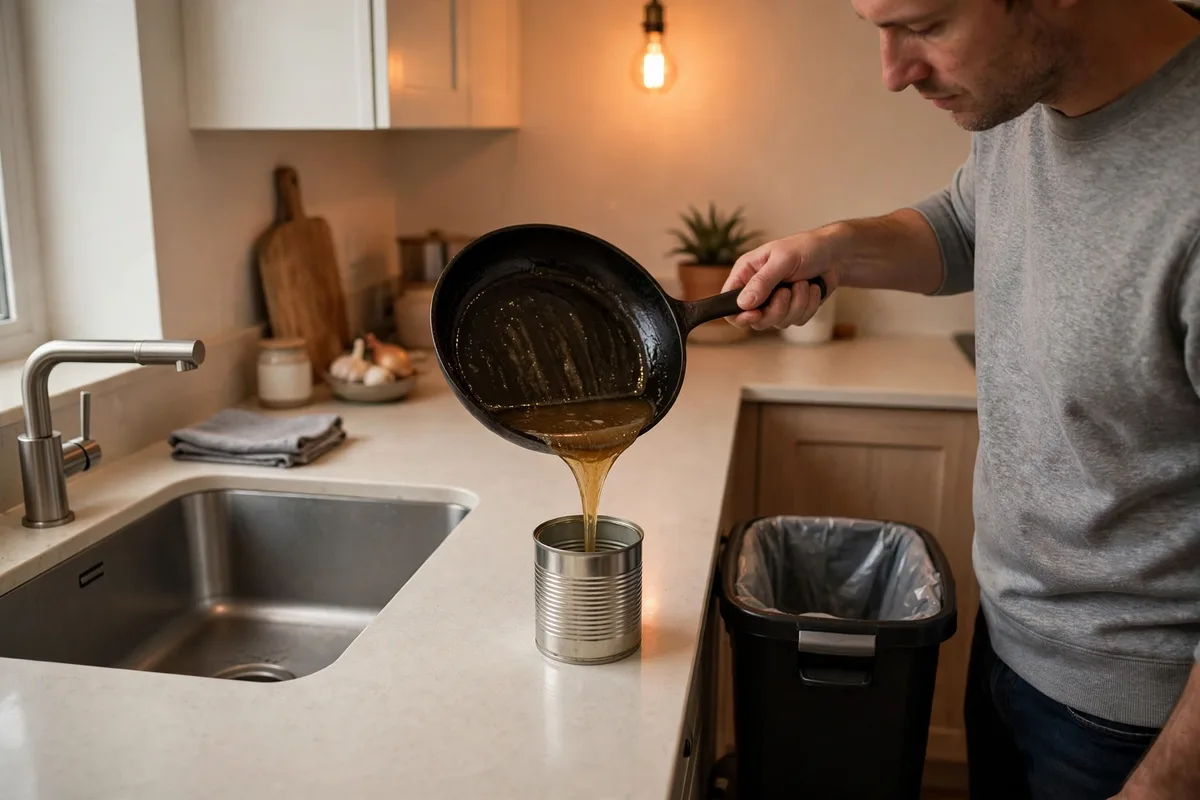
The disposal rule in one sentence: scrape the plate into the trash, and let the disposal handle only what's left.
The Warning Signs
Disposal damage announces itself before it becomes an emergency:
- The kitchen sink drains slower than it used to. Gradual slowdown means gradual buildup, usually grease coating the branch line.
- Gurgling when the dishwasher runs. The dishwasher discharges into the same branch. Gurgling means the branch is narrowed downstream.
- Recurring kitchen clogs. If the kitchen branch needs clearing more than once a year, the line is telling you about its diet.
- Grease odor from the drain. Rancid smells mean decomposing buildup is sitting in the line, not passing through it.
- Backup into the other basin. In a double sink, water rising in the second basin when the disposal runs means the shared drain is restricted.
A camera inspection of the kitchen branch shows exactly what years of disposal use have left behind, and hydro jetting scours grease-coated walls back to clean pipe. For the full list of what doesn't belong in any drain, see our never-flush guide.
Using a Disposal Without Wrecking the Line
You don't have to remove the disposal. You have to demote it. Treat it as a helper for the last scraps on the plate, not as the primary way food leaves your kitchen:
- Scrape first. Plates, pots, and pans get scraped into the trash. The disposal handles what's left after scraping, not instead of scraping.
- Grease goes in the trash, always. Container, cool, solidify, trash. No exceptions, no hot-water workarounds.
- Cold water, plenty of it. Run cold water before you start, while you grind, and for 15 seconds after. It keeps fats solid and flushes particles fully into the main.
- Small batches. Feed scraps gradually, not in one big dump. The disposal grinds finer and the line receives less at once.
- Know your pipe. If your lateral is original cast iron or clay, be twice as careful. The margin for abuse is thinner.
People Also Ask
Do garbage disposals damage sewer lines?
They accelerate buildup. Disposals grind food into particles that flow out easily but settle in the line, especially in older pipes with rough interiors or bellies where water pools. Grease from cooking solidifies on pipe walls. A disposal does not cause a sound line to fail, but it shortens the fuse on a line that already has scale, roots, or marginal slope.
Does using a garbage disposal increase the risk of sewer clogs?
Yes, measurably. Disposals add ground food waste, grease, and starch to the wastewater stream that would otherwise go in the trash. In older lines with rough interiors, bellies, or marginal slope, this extra load settles and accumulates instead of flushing through. Homes with disposals and older pipes see more frequent blockages than identical homes without, all else being equal.
Is it better to compost than use a garbage disposal?
For the sewer line, yes. Food waste kept out of the drain never becomes pipe buildup. Composting removes the grease, starch, and fiber load that disposals send downstream. If you keep the disposal, use it sparingly, run cold water generously, and never put grease down it. The less the line has to carry beyond wastewater, the longer it stays clear.
Garbage Disposal FAQs
Indirectly, yes. The disposal itself doesn't harm the pipe, but what it sends down does. Ground-up food adds solids the line wasn't designed for, grease solidifies downstream regardless of grinding, and fibrous or starchy foods create clogs that stress aging pipes. In older Ohio homes with cast iron or clay lines, heavy disposal use accelerates the buildup that leads to blockages.
Grease, oil, and fat in any form. Fibrous foods like celery, artichoke leaves, corn husks, and onion skins. Starchy foods like pasta, rice, potato peels, and bread dough. Coffee grounds in quantity. Bones, fruit pits, and anything non-food. These either solidify, tangle, swell, or settle in the line.
It's harder on septic than on city sewer. Septic systems rely on bacteria breaking down waste in the tank, and ground-up food adds a heavy organic load the system wasn't sized for. Many septic professionals recommend against disposals entirely, or at minimum pumping the tank more often if one is used.
Usually because the branch line from the kitchen is partially blocked downstream. The disposal adds a surge of water and ground solids that the narrowed pipe can't pass. If it happens regularly, the line needs cleaning or camera inspection, not a bigger disposal.
It helps in the short run and hurts in the long run. Hot water melts grease so it flows past the disposal, but it re-solidifies further down the line where the water cools, often in a worse spot. Cold water keeps grease solid near the drain where it's less harmful, but the real answer is keeping grease out of the drain entirely.
Watch for the kitchen sink draining slower than it used to, gurgling from the sink when the dishwasher runs, recurring clogs in the kitchen branch, or grease odors from the drain. A camera inspection of the kitchen branch and main lateral shows exactly what the disposal years have left behind.
Kitchen Drain Giving You Trouble?
We'll camera-inspect the line, jet the grease out if the pipe is sound, and tell you straight what your disposal has been doing down there.
Call (614) 350-5706