Sewer Line Belly: The Hidden Sag That Keeps Clogging Your Drains
By Ohio Sewer Masters
Same drain, same clog, every few months. You've had it snaked three times and it keeps coming back. What if the problem was never a clog at all?
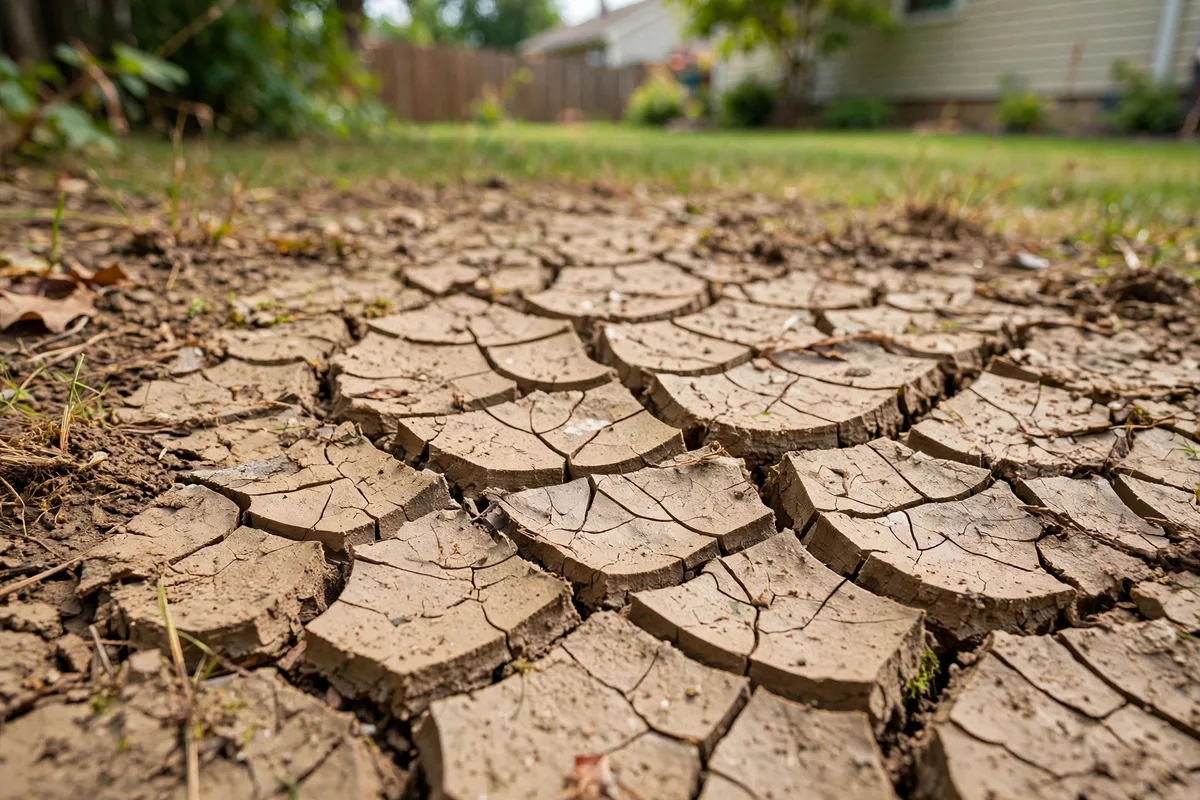
Ohio's clay soil swells when wet and shrinks when dry, and that movement is a leading cause of sagging sewer lines.
A sewer line belly is a sagging section of pipe where the line dips down and rises again, trapping wastewater and solids in the low spot. It's a geometry problem, not a blockage. That's why snaking it works for a few weeks and then the same clog returns: the snake clears the debris, but the dip that collects it is still there.
What a Belly Looks Like Underground
A healthy sewer lateral runs downhill from your house to the street at a steady slope, usually about a quarter inch per foot. Gravity does all the work. A belly breaks that slope. Somewhere along the run, the pipe sags into a shallow U, maybe only an inch or two deep, maybe several. Water and solids flow downhill into the dip, and then they have to flow uphill to get out. Liquids mostly make it. Solids don't, at least not all of them.
What collects in the sag depends on your household: toilet paper, grease, food particles, the fine sediment that every line carries. Over days and weeks it builds into a soft dam. Flow slows, then stops. You call for a snaking, the cable punches through the dam, everything drains, and the cycle restarts. The interval between cleanings, often a few weeks to a few months, is the belly refilling.
On a camera monitor, a belly is unmistakable once you know the signature: the camera swims through standing water in a dip while the pipe on either side is dry. Technicians sometimes call it "the bathtub." If you've ever wondered what your recurring clog looks like from the inside, that's it.
Why Ohio Lines Are Prone to Bellies
Bellies come from the ground moving, and Ohio ground moves.
Expansive clay soil. Much of Ohio sits on clay that swells when saturated and shrinks when dry. That seasonal swelling and shrinking doesn't happen evenly. One section of trench backfill compacts while the section next to it heaves, and the pipe spanning the two bends into a sag. The effect compounds over decades.
Poor original bedding. When a lateral is installed, the trench bottom should be graded smooth and the pipe bedded in compacted material. In older installations, and in some rushed ones, the pipe went into a rough trench with soft spots. Those soft spots settled within the first years, and the pipe settled with them. A surprising number of bellies were born the day the trench was backfilled.
Freeze-thaw heaving. Ohio's winters freeze the ground and spring thaws it, year after year. Each cycle lifts and drops the soil a fraction of an inch. Over thirty or forty winters, fractions add up. Lines in Cleveland and other northern Ohio cities, where the frost runs deep, show this more than lines in the south.
Surface loads. Driveways, patios, and additions built over an existing lateral compress the soil unevenly. A new concrete driveway poured over a 1960s clay line is a common setup for a belly forming right at the driveway edge.
For the broader soil story, our Ohio clay soil guide covers how the ground attacks pipes in every season.
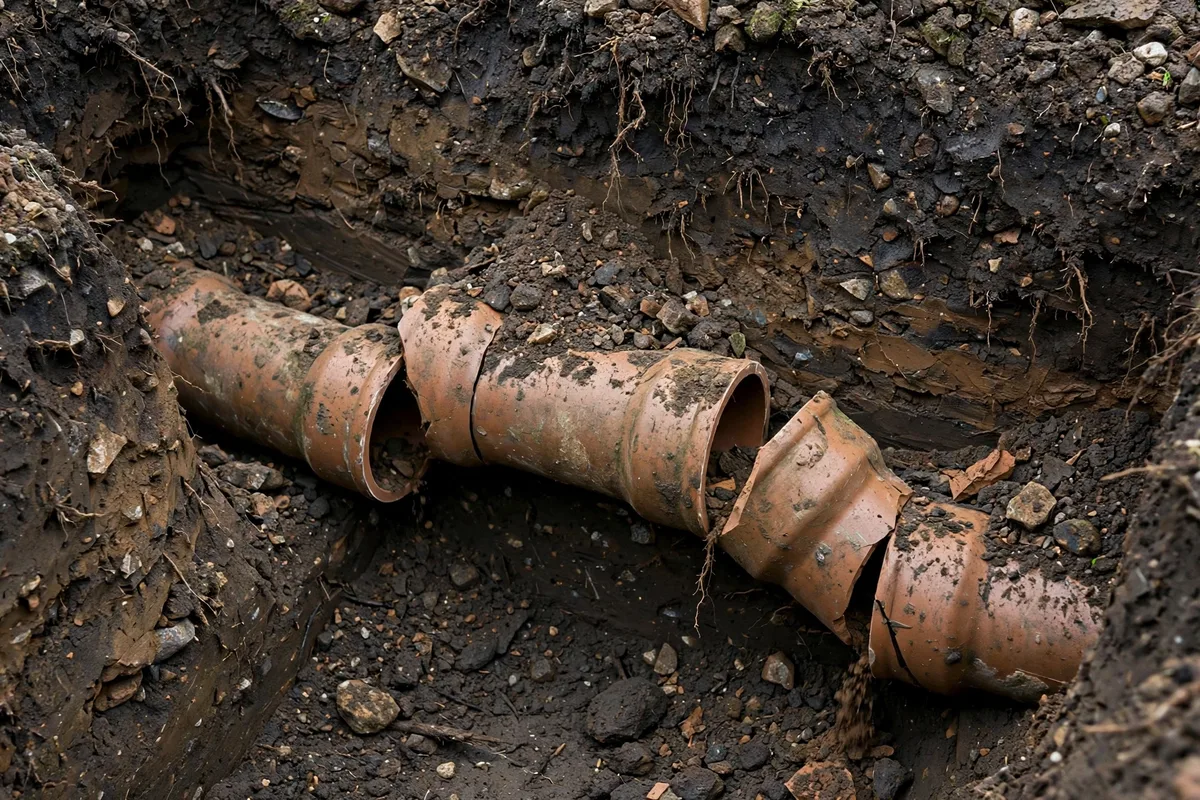
Uneven settling along the old trench is where bellies form. The pipe follows the ground down.
The Symptoms That Point to a Belly
No single symptom proves a belly, but the pattern is distinctive:
- The scheduled clog. The same fixture or the same drain backs up on a rough schedule, weeks or months apart, and snaking always "fixes" it temporarily.
- Gurgling after heavy water use. A full bathtub draining, or the washing machine discharging, produces gurgling from nearby drains as water struggles past the sag.
- Slow drainage that never fully resolves. Even right after a cleaning, flow seems a beat slower than it should be. The dip is still holding water.
- Sewage odor that comes and goes. Standing wastewater in the sag goes stagnant between uses, and gases vent back toward the house.
- Multiple fixtures affected at once. When the sag is in the main lateral rather than a branch, toilets, tubs, and floor drains all feel it.
If this pattern sounds familiar, stop paying for cleanings and get a camera inspection. Two or three snakings cost more than the inspection that would have named the real problem. Our warning signs guide covers the other patterns worth knowing.
Why Snaking and Jetting Can't Fix a Belly
This is the expensive misunderstanding. A snake clears debris. A hydro jet scours walls. Neither one changes the shape of the pipe, and the shape is the entire problem.
Snaking a belly is mowing a lawn that's growing over a sinkhole. It looks better for a while. The geometry refills on schedule. Jetting does a more thorough job of emptying the sag, and the results last a bit longer, but the water still pools in the same dip the next day. We've seen homeowners pay for half a dozen cleanings before anyone put a camera in the line, and every one of those cleanings was treating a symptom.
There's one more trap: pipe lining follows the existing pipe's shape. Line a belly and you get a beautiful, seamless, brand-new pipe that is still shaped like a U. Lining is the right fix for cracks, joints, and root entry points. It is the wrong fix for a sag. Anyone quoting you a lining to fix a belly either hasn't seen the camera footage or hasn't understood it.
What Actually Fixes a Belly
| Method | When it fits |
|---|---|
| Spot repair | A single defined sag. Excavate at the belly, replace that section, re-bed it on compacted material at proper slope. |
| Section replacement | A long or deep sag, or a sag plus adjacent damage. Replace the run with correct grade throughout. |
| Pipe bursting | Sometimes, when the new pipe can be pulled at a corrected grade. Depends on the sag's depth and the surrounding soil. |
| Snaking / jetting | Maintenance only. Buys time, never fixes the geometry. |
| Pipe lining | Not a belly fix. Useful afterward to seal the joints of the repaired section. |
Before any excavation, call 811 (call811.com) so buried utilities get marked. The U.S. EPA publishes homeowner resources on private sewer laterals that explain the owner's maintenance responsibilities.
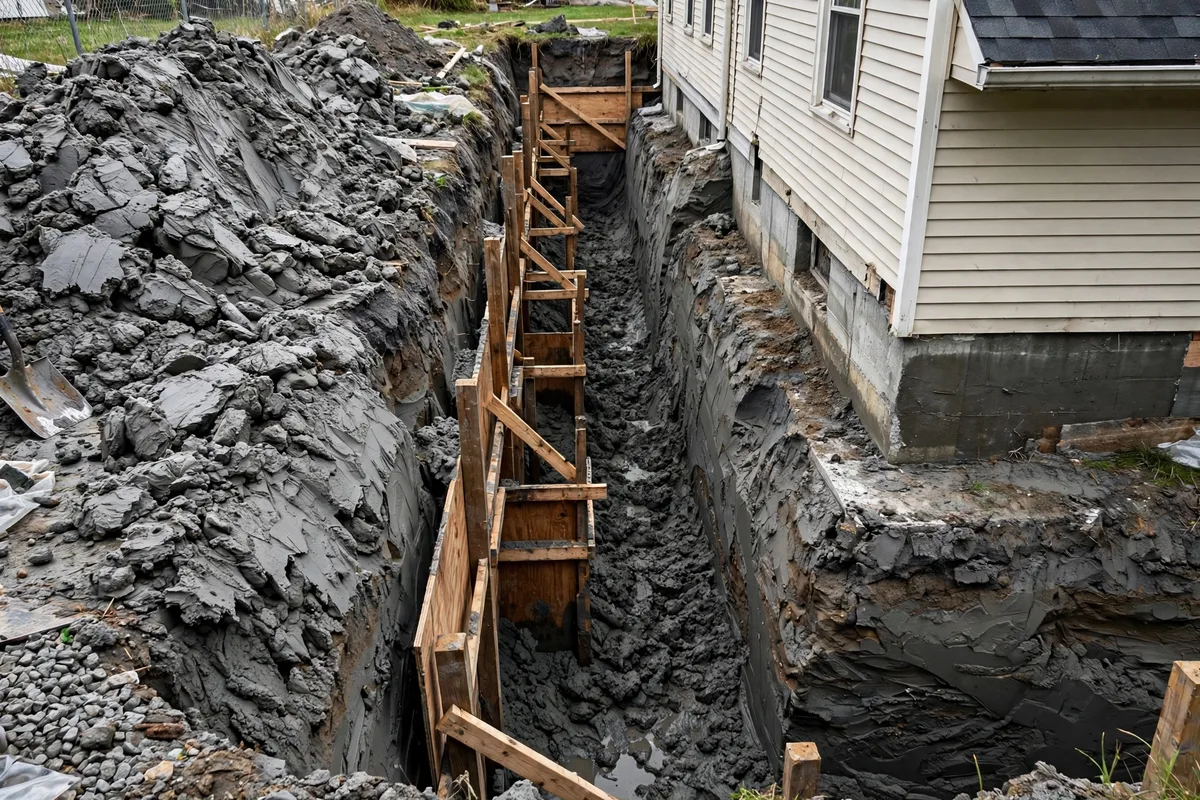
Fixing a belly means correcting the grade: the sagging section comes out and goes back in at proper slope on compacted bedding.
Will It Get Worse If You Wait?
Yes, and the mechanism is worth understanding. The standing water in the sag constantly wets the soil beneath it, softening the bedding. The collected solids add weight. Each freeze-thaw cycle shifts the softened ground a little more. The belly deepens, which holds more water, which softens more soil. It's a slow feedback loop, and it ends in one of two ways: the sag gets deep enough that cleanings stop working even temporarily, or the stressed pipe cracks at the bend and the sag becomes a break.
None of this happens overnight. A shallow belly can sit for years before it becomes urgent. But every cleaning you buy in the meantime is money spent on a problem with a known fix, and the fix doesn't get cheaper as the sag deepens. If the camera shows a belly, get the repair scoped while it's still a spot repair.
For related reading, see the cost of ignoring a slow drain and spot sewer repair.
People Also Ask
What causes a belly in a sewer line?
Soil settling under the pipe, poor compaction during installation, or ground disturbance from nearby construction. The pipe sags in the middle while the ends stay put, creating a low spot. In Ohio's clay soil, which swells and shrinks with moisture, bellies develop more readily than in stable sandy ground. Heavy loads above, like new driveways, can also press a line down.
Can a sewer belly be fixed without digging?
Usually not. Trenchless lining follows the pipe's existing shape, so it preserves the belly along with everything else. Pipe bursting can sometimes correct minor sags. A significant belly that holds standing water needs excavation to regrade that section to proper slope. The camera shows the belly's severity, which determines whether trenchless methods have any chance.
How do you know if slow drains are caused by a belly?
The pattern is distinctive: recurring clogs in the same fixtures, gurgling, and slow drainage that snaking temporarily fixes but never permanently resolves. A camera inspection confirms it visually: standing water sitting in a sagged section while the rest of the line is clear. No amount of cleaning fixes a belly because the problem is geometry, not buildup.
Sewer Line Belly FAQs
A belly is a sagging section of sewer pipe where the line dips down and then rises again, like a shallow U. Wastewater and solids collect in the low spot instead of flowing through. It's a geometry problem, not a blockage, which is why clearing methods can't fix it.
The usual causes are soil settling under the pipe, poor bedding or compaction when the line was installed, ground shifting from freeze-thaw cycles, and heavy loads above the line compacting the soil unevenly. In Ohio, expansive clay soil that swells when wet and shrinks when dry is a frequent contributor.
Usually not. Pipe lining follows the existing shape of the pipe, so lining a belly gives you a smooth new pipe that's still shaped like a U. The reliable fixes are spot repair to re-grade the sagging section or full replacement of that section with proper bedding and slope.
With a sewer camera inspection. On the monitor, a belly shows up as standing water in a dip while the pipe on either side is dry. The camera head's transmitter lets the technician mark the sag's exact location and depth from above ground, which is what a repair crew needs to fix it.
Yes, almost always. The standing water in the sag erodes the bedding underneath, the collected solids add weight, and each freeze-thaw cycle moves the soil a little more. A shallow belly becomes a deeper one, and a deeper one eventually becomes a place where the pipe cracks or separates.
The pattern gives it away. A regular clog clears and stays clear. A belly clogs, gets snaked, works for a few weeks, and clogs again in the same way. If the same drain needs clearing on a schedule, the geometry is suspect and a camera inspection will show it.
Same Clog, Third Time This Year?
We'll camera-inspect the line, show you whether it's a clog or a sag, and scope the real fix. Stop paying for cleanings that can't work.
Call (614) 350-5706